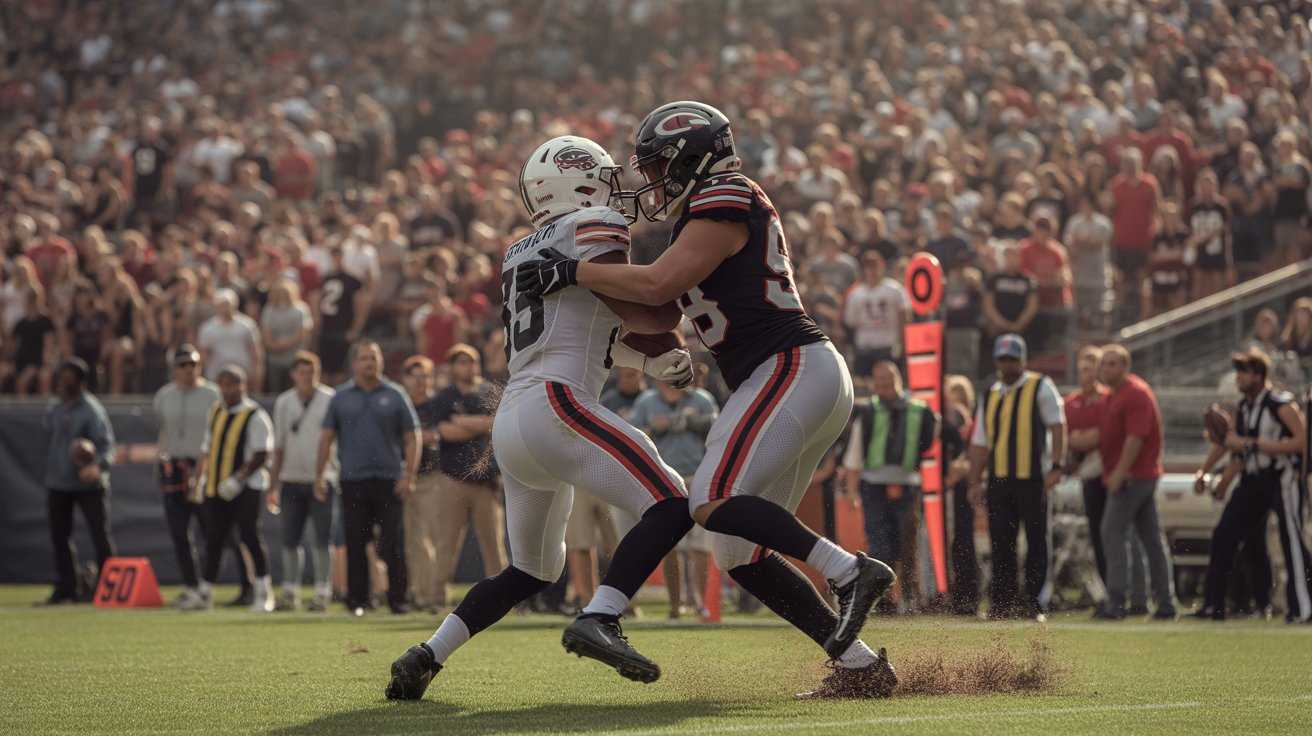
Every August, millions of football fans tune in expecting real NFL action — and walk away confused. The star quarterback played one drive. The backup threw four touchdowns. The score didn’t matter. That frustration is real, and it’s because most people don’t know what the NFL preseason actually is. Once you understand the purpose, the structure, and what to watch for, every single preseason game becomes fascinating — even the blowouts.
What Is the NFL Preseason?
The NFL preseason is a series of four exhibition games each team plays before the regular season officially opens. These games do not count toward a team’s official win-loss record. No playoff seeding comes from them. No division titles are at stake.
What is at stake? Jobs. Fifty-three of them, to be exact. Every roster spot on every NFL team gets decided during this window. Coaches use these four weeks to evaluate talent, test game plans, and build chemistry — particularly among players who are fighting to make the final 53-man roster.
The NFL preseason typically runs from early August through late August, giving teams roughly four weeks of live game action before Week 1 of the regular season kicks off in September. The league added a 17-game regular season in 2021, and that change also trimmed the preseason from four games to three for some scheduling formats — though the traditional four-game structure still applies for many matchups.
Quick Fact: The Hall of Fame Game in Canton, Ohio, kicks off each NFL preseason. It features two teams selected by the NFL and serves as the unofficial start of professional football each summer. It typically takes place the first Thursday of August.
2025 NFL Preseason Schedule
The 2025 NFL preseason follows the league’s standard format: four weeks of games spread across August, with the Hall of Fame Game opening the slate. Here’s how the general structure maps out across the league:
| Week | Timeframe | Game Focus | Starter Reps |
|---|---|---|---|
| Hall of Fame Game | Early August | Exhibition showcase, 2 selected teams | Very limited (1–2 series) |
| Preseason Week 1 | Aug 7–11 | Installation of base offense/defense | 1–2 series (5–10 plays) |
| Preseason Week 2 | Aug 14–18 | Starter evaluation, joint practices | 1 half (up to 20 plays) |
| Preseason Week 3 | Aug 21–25 | “Dress rehearsal” — most game-like | 2–3 series (12–20 plays) |
| Preseason Week 4 | Aug 28–29 | Final roster decisions, backups only | None to minimal |
Week 3 carries the most weight for analysts and coaches alike. Many teams treat it as a genuine dress rehearsal for the regular season — starters play into the second half, game plans get tested, and the evaluation intensity peaks. If you’re watching one NFL preseason game all summer, make it Week 3.
NFL Preseason Standings Breakdown
NFL preseason standings exist — Fox Sports, ESPN, and NFL.com all track them — but they carry zero official weight in determining playoff positioning or division rankings. They’re a casual reference point, nothing more.
That said, preseason records do tell a story. Teams that consistently win preseason games tend to have strong depth. Winning a preseason game usually means your second and third-string units outperformed the opponent’s. Here’s how conferences typically sort their preseason standings:
| Conference | Division | How Standings Are Sorted | Tiebreaker |
|---|---|---|---|
| AFC | North, South, East, West | Win-Loss-Tie (W-L-T) | Point differential |
| NFC | North, South, East, West | Win-Loss-Tie (W-L-T) | Point differential |
Complete NFL Preseason Stats Reference Table
Understanding what metrics coaches and scouts actually track during the NFL preseason helps fans watch games with sharper eyes. This table outlines the key statistical categories, what they measure, and why they matter during exhibition play:
| Stat Category | Key Metric | Why It Matters in Preseason | Who It Applies To |
|---|---|---|---|
| Passer Rating | QBR / Passer Efficiency | Evaluates backup QB accuracy under pressure | Quarterbacks |
| Completion % | Comp/Att ratio | Tracks ball control for backup QBs battling for the 2nd spot | QBs |
| Yards Per Carry | Rush yards ÷ carries | Helps coaches identify undrafted running back talent | RBs, FB |
| Receiving Targets | Total targets in game | Shows if a WR/TE can get open vs. backup CBs | WR, TE |
| Sacks & Pressures | Pass rush wins | Edge rushers and DTs audition for roster spot depth | DL, LB |
| Tackles + Missed Tackles | Tackles for loss | Identifies reliable tacklers on special teams depth chart | LB, Safety, CB |
| Pass Coverage Grade | PFF coverage score | Crucial for undrafted CBs fighting for a final spot | Cornerbacks |
| Touchdowns Scored | TD total per game | Casual fan indicator of offensive execution | All offense |
| Turnover Differential | Turnovers forced – given | Ball security and discipline under game conditions | Full team |
| Special Teams Coverage | Kick coverage units | Many roster bubble players survive purely on special teams | Special teams |
| Penalty Count | Penalties per game | Discipline and technique — coaches cut sloppy players | OL, DL, CB |
| Snap Count % | % of offensive snaps | Reveals who coaches trust with more opportunities | All positions |
Pro Tip: Pro Football Focus (PFF) grades every player on every snap during NFL preseason games. Their grading scale (0–100) is the single best tool for evaluating backup talent before rosters get cut to 53.
Does the NFL Preseason Record Actually Matter?
No — and also, kind of yes. The direct answer is that a team’s NFL preseason record has no statistical correlation with regular season success. Multiple studies, including analysis published by FiveThirtyEight and Football Outsiders, confirm that preseason wins predict regular season wins at essentially a random rate.
Where preseason results do matter: injuries. A star player going down in a meaningless August game can reshape an entire season. That’s the real risk-reward calculation coaches make when deciding how long starters play.
The secondary value is confidence. A backup quarterback who plays well across three NFL preseason games goes into Week 1 with proven composure under real game conditions — and that has value, even if the scoreboard never reflects it in the standings.
What Coaches Actually Watch For
Head coaches and coordinators don’t watch preseason games the way fans do. They’re not tracking touchdowns or final scores. Here’s what genuinely moves the needle in their evaluations during the NFL preseason:
- Decision-making speed: Does the quarterback go through his progressions correctly, even under pressure from backup pass rushers?
- Pad level and technique: Offensive linemen who play high get flagged immediately in film sessions.
- Route precision: A receiver who runs sloppy routes doesn’t get open, no matter how fast he is.
- Special teams effort: Many roster decisions come down to who hustles on kickoff coverage — pure effort, no talent excuse.
- Play recognition: Defensive backs who identify formations quickly and align properly before the snap stand out on film.
- Situational football: How does a player respond after making a mistake? Does he stay focused or fall apart?
The best evaluation happens not on highlight plays but on the routine downs — the third-and-three run blocks, the coverage on a throwaway screen, the chip block on a stunting tackle. Coaches rewind those plays dozens of times.
Roster Cuts and the Bubble Players
The NFL preseason culminates in one of the most emotional days in professional sports: final roster cut day. Every team must trim from 90 players down to 53 before the regular season starts. That means 37 players per team — roughly 1,200 players across the league — lose their jobs in a single 24-hour window.
Teams go from 90 to 80 players after the first preseason game, giving coaches an early look at who clearly doesn’t fit. The final cut from 80 to 53 comes after the final preseason game.
| Cut Deadline | Roster Limit | When It Happens |
|---|---|---|
| Initial Cut | 90 → 80 | After Preseason Week 1 |
| Secondary Cut | 80 → 53 | After Preseason Week 4 (Tuesday) |
| Practice Squad Signings | 16-man practice squad | Wednesday of Week 1 |
Players cut from the 53-man roster often land on a team’s practice squad or get signed by another organization within days. The waiver wire after roster cut day is one of the most active periods in the entire NFL calendar.
How Long Do Starters Play in NFL Preseason Games?
This question defines the fan experience of watching any NFL preseason game. Starters play very little — and intentionally so. Here’s the general breakdown by week:
- Week 1: Most starters sit entirely, or play a single series (approximately 5–7 plays). Head coaches protect their investment.
- Week 2: Starters get a half, roughly 15–20 plays, to shake off rust and sync up with receivers.
- Week 3 (Dress Rehearsal): Starters play the most — sometimes deep into the second half. This is the most valuable evaluation week of the entire NFL preseason.
- Week 4: Starters almost universally sit. This game belongs entirely to players on the roster bubble fighting for their careers.
Some head coaches — notably Bill Belichick during his Patriots tenure — famously sat their starters for nearly the entire preseason and still opened the regular season in championship form. Others, like Sean Payton, prefer heavier starter reps to install complex offensive systems. Philosophy varies wildly by coaching staff.
NFL Preseason Betting — What You Should Know
Betting markets for the NFL preseason exist, and they attract serious action. But they operate differently from regular season wagering in several important ways.
Because starters play limited snaps, the outcome of an NFL preseason game rests heavily on backup quarterbacks and third-string units. Coaching style matters enormously here — a coach who runs his starters deep into Week 2 gives his team a structural advantage over a conservative opponent who sits everyone after one series.
- Point spreads are tighter: With less information and unpredictable starter usage, sportsbooks keep lines narrow.
- Sharp money follows coaching tendencies: Bettors who track each coach’s preseason philosophy find edges the casual public misses.
- Player props are unreliable: A star receiver might play three snaps. Avoid props on starters.
- Totals (over/under) are volatile: Backup quarterbacks throw more interceptions, which slows scoring drives and crushes overs.
Note: This section is for informational purposes only. Always follow local laws and regulations regarding sports wagering. Bet responsibly.
Notable NFL Preseason History
The NFL preseason has its own rich history — some moments of it genuinely changed how teams approach the summer schedule:
- Kevin Ware-style injuries: Multiple high-profile preseason injuries over the decades — including star players tearing ACLs in meaningless August games — pushed coaches toward drastically limiting starter exposure.
- Tom Brady’s debut (2001): Brady saw his first NFL action during the preseason. Coaches who watched his poise in those early snaps knew something special was developing.
- The Chicago College All-Star Game (1934–1976): For decades, the NFL champion played a team of college All-Stars in a summer exhibition. The NFL eventually ended it, but it shaped early preseason culture.
- American Bowl series (1986–2005): The NFL staged preseason games in international cities — London, Tokyo, Berlin — to grow the global audience. This later evolved into the International Series.
The Hall of Fame Game itself traces back to 1962, making it one of the oldest consistent events on the NFL preseason calendar. Canton, Ohio has opened the football season for over six decades.
Fantasy Football and NFL Preseason Stats
Fantasy football managers treat the NFL preseason as a critical scouting window — and with good reason. Several clues emerge from these games that signal breakout candidates and injury concerns before the draft:
- Target share among receivers: When a second-year wide receiver draws 8 targets in a single preseason game, that’s not random — the coaching staff is testing a real connection.
- Running back carries: The back who leads the team in carries across Weeks 2 and 3 often opens the regular season as the feature back, even if depth charts don’t confirm it yet.
- Offensive line cohesion: A quarterback who operates clean and moves comfortably in the pocket during preseason usually has a well-gelled offensive line heading into the season.
- Injury news from camp: Preseason is when training camp injuries become public. A star running back nursing a hamstring issue will see limited preseason snaps — and that pattern matters for Week 1 projections.
Sites like FantasyPros and The Athletic publish detailed preseason snap count analyses after every NFL preseason week. These are among the most useful data points available before fantasy drafts lock in.
Full NFL Preseason: Teams, Format & Key Data Overview
| Category | Detail |
|---|---|
| Total NFL Teams | 32 (16 AFC, 16 NFC) |
| Preseason Games Per Team | 4 games (Hall of Fame participants play 1 extra) |
| Total Preseason Games (League) | 65 games across 4 weeks |
| Roster Size (Preseason) | 90 players per team |
| Final Regular Season Roster | 53 players per team |
| Practice Squad Size | 16 players per team |
| Hall of Fame Game Location | Tom Benson Hall of Fame Stadium, Canton, OH |
| Preseason Start Date (2025) | Early August 2025 |
| Regular Season Start | First Thursday/Sunday of September |
| Broadcast Partners | FOX, CBS, NBC, ESPN/ABC, Amazon Prime Video |
| Average Preseason Attendance | 55,000–70,000 per game (varies by market) |
| Preseason Win-Loss Impact | Zero — does not affect playoff seeding |
| Key Evaluation Week | Week 3 (“Dress Rehearsal Game”) |
| Final Cut Day | Tuesday after Preseason Week 4 |
| Players Cut League-Wide on Cut Day | ~1,184 players (37 × 32 teams) |
Frequently Asked Questions About NFL Preseason
Q: Do NFL preseason games count in the standings?
A: No. NFL preseason games are exhibition contests. Wins and losses during the preseason have absolutely no effect on a team’s official regular season record, playoff positioning, or division standings. The NFL tracks preseason win-loss records as a separate, unofficial statistic purely for reference. What matters is the talent evaluation that happens during those games, not the final score on the scoreboard.
Q: How many preseason games does each NFL team play?
A: 4 preseason games per team. Every NFL franchise plays four preseason games before the regular season begins. The two teams selected to play in the Hall of Fame Game effectively play five preseason games that year. The league schedules games across four weeks in August, wrapping up just before Labor Day weekend when the regular season opens.
Q: Which NFL preseason week is most important to watch?
A: Week 3 — the “Dress Rehearsal Game.” Most coaches treat Week 3 of the NFL preseason as the closest thing to a real regular season game. Starters typically play their most extended stretch of action — sometimes deep into the second half — and game plans come closest to what teams will run in September. For talent evaluation, fantasy preparation, or simply enjoying football at its sharpest, Week 3 is the game to watch.
Q: When does the NFL preseason start in 2025?
A: Early August 2025, with the Hall of Fame Game. The 2025 NFL preseason opens with the annual Hall of Fame Game in Canton, Ohio, scheduled for the first Thursday of August. Regular preseason games begin the following week and run through late August. The exact schedule, matchups, and broadcast times are confirmed by the NFL in the spring. Check NFL.com for official game times and TV listings once released.
Q: Why do star players barely play in the NFL preseason?
A: Injury protection and risk management. Coaches limit starter exposure during the NFL preseason because the injury risk outweighs the benefit in games that don’t count. A starting quarterback who tears his ACL in August costs the team an entire season. The preseason’s purpose is evaluating depth, not showcasing established starters. Teams have full training camps, joint practices, and film study to keep their stars sharp — live game action with full contact simply isn’t worth the risk for players already proven at the NFL level.
Q: What happens to players who get cut after the NFL preseason?
A: They enter the waiver wire or sign to a practice squad. Players released on final cut day (Tuesday after Preseason Week 4) immediately become available to all 32 teams via the waiver system. Teams with worse records get waiver priority, meaning they can claim cut players first. If a player clears waivers unclaimed, he becomes a free agent. Many players also sign to a team’s 16-man practice squad, which allows continued development while remaining available for elevation to the active roster during the season.
Watch the NFL Preseason Differently This Year
The NFL preseason isn’t filler between the Super Bowl and September — it’s where rosters get built, careers begin, and coaching philosophies get tested under real game conditions. Watch for the backup quarterback managing pressure, the undrafted receiver running precise routes, and the special teams gunner sprinting down the field with everything on the line.
The names on the back of those jerseys may not be on the Pro Bowl ballot — but by Week 16, a few of them absolutely will be. That’s the magic of the NFL preseason.
📅 Jump Back to the Schedule →
Primary Sources & References
- NFL.com — Official Preseason Schedule
- Fox Sports — NFL Preseason Standings
- Pro Football Focus (PFF) — Player Grading & Analytics
- Football Outsiders — Advanced NFL Metrics
- ESPN NFL — Preseason Coverage Hub
*Written by an NFL Coverage Specialist — 10+ years covering professional football strategy, roster construction, and preseason analytics.*
You Also Like To Read: Ohio State Football Schedule 2025